How Much Does Organic Cotton Yarn Cost? A Strategic Sourcing Guide
March 10, 2026 | Business | No Comments
Table of Contents
- Introduction: Navigating the Complex Value Proposition of Organic Cotton
- Beyond Price: Understanding the Total Cost of Ownership (TCO)
- Market Context: The Surge in Demand for Sustainable Textiles
- Deconstructing the Cost Structure of Organic Cotton Yarn
- Raw Material (Farm Gate): The Premium for Organic Cultivation
- Processing & Spinning: GOTS vs. Non-GOTS Certification Costs
- Yarn Construction: How Count, Ply, and Spin Type Affect Price
- Logistics & Volatility: The Hidden Cost Factors
- Global Price Benchmark Analysis: A Regional Breakdown
- Table 1: Average Spot Prices for Key Organic Cotton Yarn Types (2025 Q2)
- India: The Volume Leader – Cost Advantages and Quality Tiers
- Turkey: The Quality and Proximity Hub for Europe
- USA (Texas & California): Domestic Premium, Traceability, and ESG Appeal
- China: Competitive Pricing with Evolving Certification Standards
- Africa (Tanzania, Uganda): Emerging Origin with Growth Potential
- Price Drivers: A Deep Dive into Market Mechanics
- Supply-Side Factors: Weather, Yield per Hectare, Farmer Premiums
- Demand-Side Factors: Brand Commitments, Regulatory Push (EU Green Deal)
- Macro-Economic & Geopolitical Influences: Currency Fluctuations, Trade Policies, Freight Rates
- The “Green Premium” Quantified: Price Differential vs. Conventional Cotton (2021-2025 Trend Analysis)
- Yarn Specification & Its Direct Impact on Price
- Count & Ply Matrix: 16/1 vs. 30/1 vs. 40/2 – Cost Implications
- Spin Technology: Carded vs. Combed vs. Compact Yarn – Price Variance
- Specialty Yarns: Gassed, Mercerized, Slub – Understanding the Markup
- Table 2: Price Comparison by Specification (Indicative % Premium over Base Carded)
- Certification as a Cost Multiplier: GOTS, OCS, Fairtrade
- Breakdown of Certification Costs (Audit, Transaction Certificate, Mass Balance vs. Physical Segregation)
- The Business Case for Certification: Risk Mitigation and Market Access
- Strategic Sourcing for Different End-Use Industries
- Apparel (Knitwear & Woven): Balancing Softness, Performance, and Budget
- Home Textiles (Towels, Bedding): Prioritizing Absorbency and Durability
- Baby & Childrenswear: Non-Negotiable Need for GOTS Certification
- Technical & Non-Woven Applications: Cost-Optimization Strategies
- Future Outlook: Price Trends, Innovations, and Risk Mitigation
- 2025-2027 Price Projection Scenarios (Baseline, High, Low)
- The Role of Regenerative Organic Cotton and its Premium
- Technological Innovations in Spinning Efficiency
- Hedging Strategies and Long-Term Contracting Considerations
- Actionable Framework for Cost-Effective Procurement
- The 5-Step Sourcing Decision Matrix
- Questions to Ask Your Yarn Supplier (Beyond Price per Kg)
- Building a Resilient and Ethical Supply Chain
- Conclusion: Making Informed Investment Decisions
- Key Takeaways for Procurement Leaders
- Frequently Asked Questions (FAQ)
1. Introduction: Navigating the Complex Value Proposition of Organic Cotton
For procurement professionals across the textile value chain, the question “How much does organic cotton yarn cost?” is no longer niche—it’s central to strategic planning. The global market for organic cotton is projected to grow at a CAGR of over 10%, driven by stringent consumer demand and tightening regulations like the EU’s Strategy for Sustainable and Circular Textiles. However, How Much Does Organic Cotton Yarn Cost? A Strategic Sourcing Guide the price is not a single figure; it’s a reflection of a complex ecosystem encompassing agronomy, certification, geopolitics, and evolving consumer ethics. This guide moves beyond simple price lists to provide a granular, data-driven analysis of the cost structures, regional dynamics, and strategic considerations essential for making informed, value-based sourcing decisions in 2025 and beyond.
2. Deconstructing the Cost Structure of Organic Cotton Yarn
Understanding what you’re paying for is critical. The final cost per kilogram (or pound) of organic cotton yarn is an aggregation of multiple components, each carrying its own premium:
- Raw Material (40-60% of final cost): Organic cotton fiber commands a significant farm-gate premium over conventional cotton, typically 15-35%, depending on the region and year. This covers:
- Non-GMO seeds.
- Organic fertilizers and pest control (more labor-intensive).
- Lower yield per hectare (often 10-20% less than intensive conventional farming).
- Certification costs at farm level.
- Premiums paid directly to farmers to ensure livelihood sustainability—a core ethical cost.
- Ginning & Processing (10-15%): To maintain integrity, organic fiber must be processed separately from conventional fiber, requiring dedicated production lines and thorough cleaning to prevent contamination. This logistical separation adds cost.
- Spinning (20-30%): This is where specifications drastically alter price. A combed, ring-spun, GOTS-certified organic yarn in a fine count (Ne 40/1) will be substantially more expensive than a carded, open-end spun yarn in a coarse count (Ne 16/1). The spinning premium for organic is generally 5-15% over processing equivalent conventional cotton, mainly for tracking and certification upkeep.
- Certification & Logistics (5-10%): This includes the cost of audits, transaction certificates (TCs), and the physical segregation of inventory. Mass Balance certification is often 3-7% cheaper than fully Physical Segregation, but carries different marketing limitations. Logistics costs can be volatile.
3. Global Price Benchmark Analysis: A Regional Breakdown
Prices are dynamic. The following table provides a snapshot of average spot prices for key yarn types in Q2 2025. (Note: Prices are FOB origin, in USD per kilogram, for medium-sized container orders. They are indicative and subject to negotiation and market fluctuation.)
Table 1: Indicative Global Organic Cotton Yarn Spot Prices (Q2 2025)
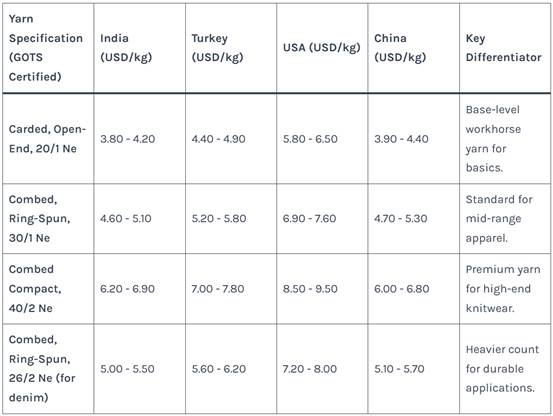
- India: The world’s largest producer offers the most competitive prices, supported by massive scale and integrated supply chains. Quality can vary significantly, necessitating strict supplier qualification. Best for large-volume, cost-sensitive orders.
- Turkey: Acts as a quality and logistics hub for European brands. Prices are higher than India but offer advantages in consistency, shorter lead times, and strong compliance with EU standards. Excellent for nearshoring strategies.
- USA: Offers a premium product with strong traceability (e.g., Texas Organic Cotton Cooperative) and a compelling “homegrown” narrative for brands. Prices reflect higher labor and operational costs but mitigate some geopolitical and long-distance shipping risks.
- China: Pricing is competitive, often between India and Turkey. The focus on organic is growing rapidly, and spinning technology is advanced. Key considerations involve the transparency of the certification chain and evolving geopolitical trade dynamics.
- Africa (e.g., Tanzania): An emerging origin with potential for lower costs and a strong story. Currently limited by spinning capacity; often exports fiber rather than yarn. One to watch for long-term strategy.
4. Price Drivers: A Deep Dive into Market Mechanics
The “green premium” is not static. It is influenced by:
- Conventional Cotton Prices: Organic prices are loosely correlated. If conventional cotton (e.g., ICE Futures) surges, the organic premium may shrink in percentage terms, though absolute cost rises.
- Brand Demand: Major brand commitments (e.g., Nike, H&M, Patagonia pledging to use 100% sustainable cotton by 2025) create demand pull, placing upward pressure on prices.
- Yield Variability: Organic farming is more susceptible to weather shocks. A poor harvest in a major region like India constricts supply and spikes prices.
- Regulation: The EU’s impending regulations will effectively mandate fiber-level traceability and sustainability reporting, increasing the value (and cost) of robustly certified organic cotton.
5. Yarn Specification & Its Direct Impact on Price
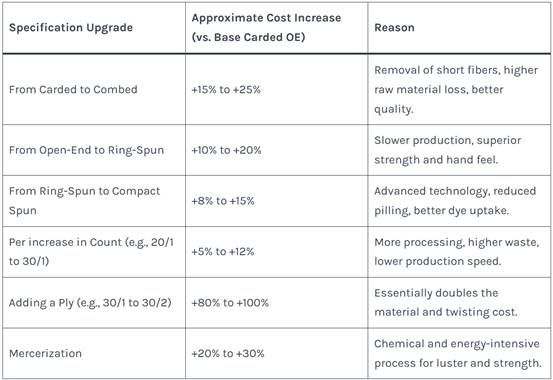
A finer count (higher Ne number) requires more skilled labor, longer processing times, and results in more waste (noil). A 2-ply yarn (e.g., 40/2) uses roughly twice the fiber and processing as a single ply (40/1). The choice of spinning technology is a major cost driver.
Table 2: Price Impact of Yarn Specifications (Indicative Premium)
6. Certification as a Cost Multiplier
GOTS (Global Organic Textile Standard) is the gold standard, covering environmental and social criteria from field to finished product. Its cost includes:
- Annual Audit Fees: For spinning mills, these can range from $2,000 to $10,000+.
- Transaction Certificates (TCs): A fee per shipment (e.g., $0.02 – $0.05 per kg), which is the primary cost passed down the chain.
- Mass Balance vs. Physical Segregation: Physical segregation requires dedicated storage and production runs, adding 5-10% to operational costs compared to Mass Balance, but allows for a “100% Organic” label.
7. Strategic Sourcing for Different End-Uses
- Apparel Manufacturers: For high-volume basics (t-shirts), a combed, ring-spun 30/1 or 40/1 from India or Turkey offers the best balance. For luxury knitwear, combed compact 40/2 or 50/2 is worth the investment.
- Home Textile Producers: For towels, carded, low-twist yarns provide excellent absorbency at a lower cost. For premium bedding, move to combed yarns.
- Babywear & Toy Manufacturers: GOTS Certification is non-negotiable. Invest in the softest combed or compact yarns, as hand-feel is a primary purchasing driver. The cost is part of the product’s value proposition.
- Procurement Strategy: Consider blending organic with other sustainable fibers (like recycled cotton or Tencel™) to manage cost while maintaining a strong sustainability story.
8. Future Outlook & Risk Mitigation
Prices are expected to remain at a premium but may see increased volatility. Key strategies include:
- Diversification: Source from multiple regions (e.g., India + Turkey) to mitigate regional crop or political risk.
- Long-Term Agreements (LTAs): Lock in prices and supply with trusted suppliers for 12-24 months to ensure stability.
- Invest in Traceability: Technologies like blockchain, while having an upfront cost, can reduce audit risks and provide a marketing advantage.
- Stay Informed: Monitor reports from Textile Exchange and the International Cotton Advisory Committee (ICAC).
9. Actionable Framework for Procurement
- Define Need: Garment type, required certification, quality level.
- Specify Precisely: Count, ply, spin type, finish.
- Identify Origin: Balance cost, lead time, and risk.
- Qualify Suppliers: Audit for true certification compliance, financial health, and ethical practices.
- Negotiate Holistically: Consider TCO (including minimum order quantities, payment terms, and logistics) rather than just unit price.
Key Questions for Suppliers:
- “Can you share the Transaction Certificate for the fiber lot used in this yarn?”
- “What is your annual GOTS audit scope and who is the certifying body?”
- “What is your policy on mass balance vs. physical segregation?”
- “What are your standard lead times and MOQs for this specification?”
10. Conclusion
The price of organic cotton yarn is a multifaceted equation where cost, value, and values intersect. For procurement leaders, success lies in moving beyond price-per-kilo to understand the underlying drivers, strategically align yarn specifications with end-use, and build resilient, transparent partnerships with suppliers. The investment in organic cotton is not merely a line item cost; it is an investment in supply chain resilience, brand equity, and the future of the textile industry.
11. Frequently Asked Questions (FAQ)
Q1: What is the typical price premium for GOTS-certified organic cotton yarn versus conventional cotton yarn?
A: As of mid-2025, the premium ranges from 25% to 60%, depending on specifications and origin. For a standard combed 30/1 Ne yarn, the organic premium is often 35-45%. The premium is narrower for coarse, carded yarns and wider for fine, compact-spun premium yarns.
Q2: Is “organic cotton” yarn without GOTS certification significantly cheaper?
A: Yes, it can be 10-25% cheaper. However, this comes with substantial risk. Without GOTS (or an equivalent like OCS), you have no third-party verification that the cotton was grown organically or processed under environmental and social criteria. For brands making sustainability claims, this is a major reputational and legal risk.
Q3: Why is US-grown organic cotton yarn so much more expensive than Indian?
A: The price difference (often 40-70% higher) is due to significantly higher labor, land, and operational costs in the US, coupled with smaller-scale farming and less integrated supply chains. The value proposition is superior traceability, shorter shipping times to North American markets, and a “Domestic/USA” marketing story.
Q4: What is the cost difference between Mass Balance and Physically Segregated GOTS yarn?
A: Physically segregated yarn typically costs 5-12% more than Mass Balance. This covers the operational inefficiencies of dedicated production runs, separate storage, and increased handling to prevent any mixing with conventional materials.
Q5: Can we negotiate the price of organic yarn down like conventional yarn?
A: Negotiation is always possible, but the leverage is different. Focus on volume commitments, long-term contracts, and logistical efficiencies rather than just hammering the unit price. Remember that a significant portion of the cost is fixed (farmer premium, certification). Pushing price too low can risk integrity elsewhere in the supply chain.
Q6: How do fluctuating oil prices affect organic cotton yarn costs?
A: Indirectly, but significantly. Oil prices impact the cost of:
- Transportation (sea and land freight).
- Organic fertilizers (some are petroleum-based).
- Energy for ginning and spinning mills.
A 20% increase in oil prices can translate to a 2-5% increase in delivered yarn cost.
Q7: Is it cheaper to buy organic fiber and commission spinning, or buy ready-spun yarn?
A: For all but the largest vertically integrated manufacturers, buying ready-spun yarn is almost always more cost-effective. Commission spinning (tolling) requires huge minimum quantities (multiple container loads of fiber), deep technical expertise, and you bear all the risk of yield loss and quality issues during spinning.
Q8: How does the choice between carded and combed organic yarn affect my final fabric cost?
A: The yarn cost difference (15-25%) carries directly through. However, combed yarn produces fabric with less pilling, better stitch definition, and a smoother hand, which can reduce seconds (waste) in cutting and sewing and justify a higher retail price. The TCO may favor combed for premium products.
Q9: Are there reliable price indices for organic cotton yarn?
A: There is no single public futures market like ICE for organic. The best sources are:
- Supplier quotations from multiple origins.
- Market intelligence reports from organizations like Textile Exchange, Cotton Inc., and Plexus.
- Industry networking at trade shows.
Q10: Should we expect the organic premium to shrink over time as supply increases?
A: In the long term, yes, efficiencies of scale should moderate the premium. However, in the short-to-medium term (next 3-5 years), demand growth is likely to outpace supply growth, keeping premiums robust. Furthermore, the increasing cost of compliance (due to regulations) may offset some efficiency gains.
